* Tomato, Bacon and Sage Soup *

Image

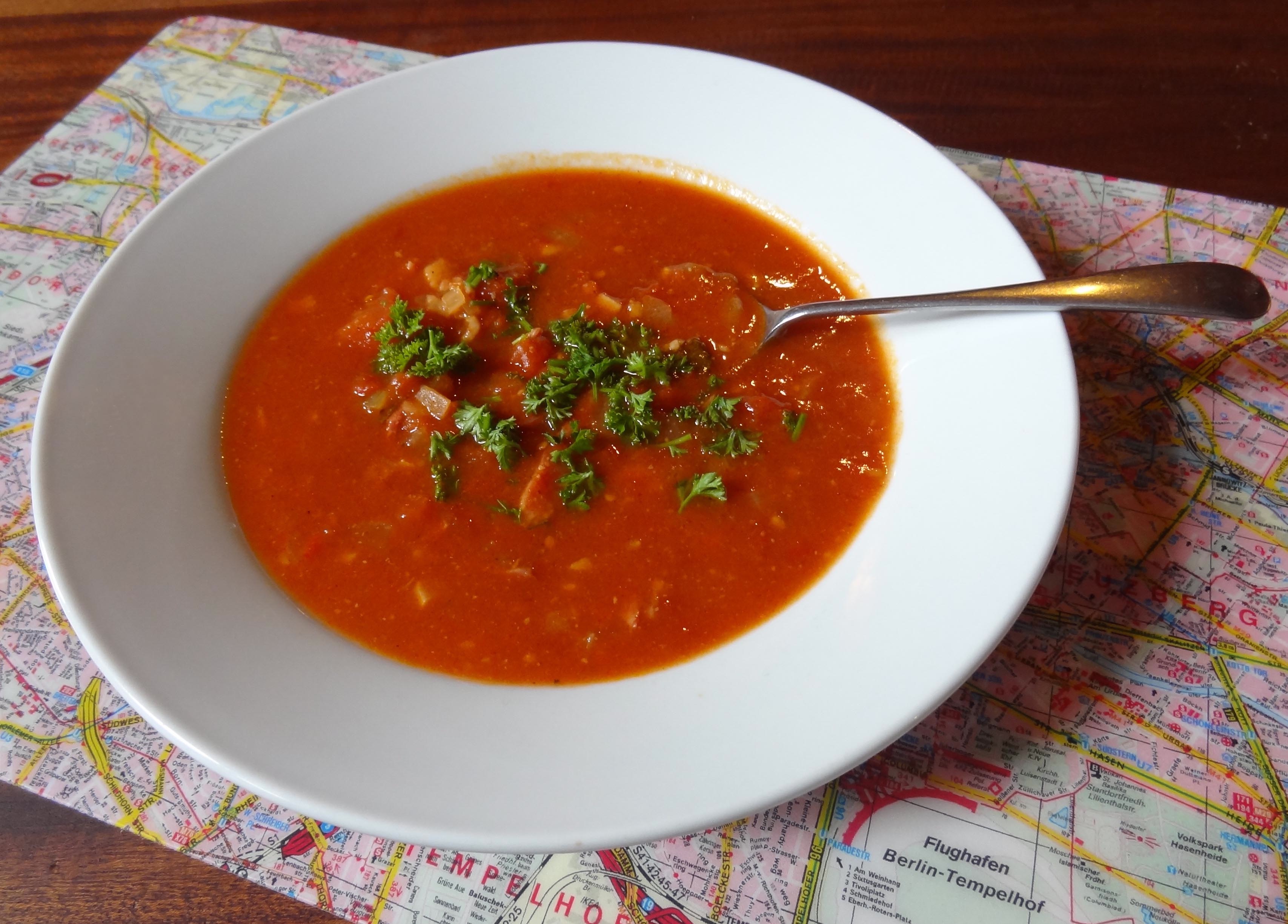
Oh my gilly gosh, you have never tasted soup this good.  This recipe was created by my Beau, who felt we needed something seriously nutritious on a Sunday afternoon following a rather social weekend – and the result was delicious.  The combination of flavours is perfect and the bacon gives the soup substance and heartiness.  In our home we tend to roast a free-range chicken once a week and create a stock from the leftover bits and bobs, which is used as the base for this soup.  I’ll also warn you now – this soup is seriously moreish so there is a high chance of a few spats over the last spoonful – and watch out for the cunning tactics of your fellow clan attempting to distract you from the pot’s contents for an extra morsel.  On the rare occasion that there are any leftovers,  a cannellini bean or lentil stew may be created, which I’ll write the recipe for another day.  Don’t be put off by the complexity of this recipe, the finished product will be truly be worth it’s weight in tomatoey gold.

Did you know that cooked tomatoes are better for you than raw ones?  Tomatoes are an excellent source of lycopene, the phytochemical that makes them red and which also has significant antioxidant properties.   Research has shown that through the cooking process, tomatoes boost their antioxidant properties even more as the level of phytochemicals increases  The higher level of lycopene is good news as it devours at least 10 times more oxygenated free radicals than vitamin E.  And as the weather in Dunedin turns from balmy Indian summer to freezing overnight, we need all the warming goodness we can get.

2 cans of whole-peeled tomatoes

A can of tomato paste

6 bay leaves

8 fresh sage leaves

2 finely diced onions

2 tablespoons of olive oil

4 cups of chicken stock

3 – 4 rashers of free-range shoulder bacon, fat trimmed off and cut into strips

2 teaspoons of Worcester sauce

7 cloves of garlic, diced

2 -3 tablespoons of Parmesan cheese, grated

1/2 a cup of white wine

A  teaspoon of white pepper to taste

A tablespoon of honey

Parsley for garnishing

In a saucepan, heat two cans of whole-peeled tomatoes and a can of tomato paste on a low simmer and add 6 bay leaves to the pot.  In a frying pan, saute onions at a high temperature until they start to sweat and add finely chopped sage leaves.  Add two cups of stock gradually and simmer until the onions are translucent.  Add the onions to the pot tomatoes.  Place frying pan back on the heat and add the other tablespoon of olive oil.  Once the oil is hot, add the bacon and two teaspoons of Worcester sauce and saute. When the bacon is getting nicely browned, add the garlic and fry for a minute.  Add half a cup of white wine to deglaze the pan.  Once the wine has been absorbed, add the last 2 cups of stock and simmer for a couple of minutes, then mix into the pot of tomatoes and simmer gently.  Add the Parmesan cheese, white pepper and honey, then, after a couple of minutes on the stove, give it a mash and allow to simmer for 5 to 10mins.  Garnish with parsley and serve.

* Banana and Coconut Pancakes with Roasted Stone Fruit and Coconut Yoghurt *

Image

If you’ve ever had the luxury of eating banana pancakes in Thailand, you’ll know just how delectable they are.  These are a take on the pancakes I chose off the restaurant menus in Thailand time and time again.  Light, fluffy and seriously moreish, they are sure to get you in the good books with whoever put you on the naughty chair (errm, sorry about that, honey).  This recipe is perfect if you have a crowd to feed, as the pancakes keep well in a warm oven in between a couple of paper towels whilst you finish off rest of the batch.  The combination of the pancakes with the roasted stone fruit and coconut yoghurt is such a winner that this is sure to become a Sunday morning staple.

Coconut has received a great deal of press recently. as it is often hailed as a superfood but also has a high content of saturated fat, which is linked to heart disease.   However, coconut  also contains lauric acid, which is a super foodie star.  Lauric acid may help raise good cholesterol levels and is antimicrobial, which supports the immune system.  Coconut also contains vitamin C  and potassium, which coupled with potassium-rich bananas in this recipe, is sure to pack a punch. My advice is to enjoy the benefits of coconut in moderation and head out for an afternoon stroll with your honey to further cement your place in their Good Books.

Pancakes

3 free-range eggs

3 bananas

1/3 of a cup of coconut milk (reserve the cream at the top of the can for the accompanying yoghurt)

2 tablespoons of oat bran

1/3 of a cup of wholemeal flour

3 tablespoons of coconut flakes plus a handful for toasting

A teaspoon of baking soda

A teaspoon of cinnamon

A teaspoon of vanilla paste, a vanilla pod or 1/2 a teaspoon of vanilla extract

Coconut oil for cooking

Measure the dry ingredients into a bowl, mix together and form a well in the centre.   Mash the bananas and put aside.  Beat the eggs until nice and fluffy and add the coconut milk and vanilla.  Add the bananas and then place all the wet ingredients in the well and mix until combined.  Heat a small amount of coconut oil in a pan and spoon the batter into the pan.  N.b. these pancakes tend to flip better if they are smaller, usually 3 in the pan at once works a treat.  Cook until the upper side is covered with bubbles.  Turn the pancakes and cook the other side until golden brown.  Place on a plate in between two paper towels and rest in a warm oven.  Repeat with the rest of the batter until you have a mound of delicious pancakes.


Roasted Stone Fruit

3 – 4 nectarines

3 – 4 plums

A tablespoon of apple syrup, agave or pure maple syrup

1/2 a teaspoon of vanilla paste or vanilla essence

The zest of a lemon

Heat the oven to 180°C.  Cut the stone fruit into halves or quarters depending on size and place in an oven dish.  Mix the syrup/agave with the vanilla and lemon zest and drizzle over the fruit.  Bake in the oven for 20 – 30 minutes until perfectly roasted.


Coconut Yoghurt

A cup of yoghurt

A tablespoon of honey, melted

Coconut cream from the top of the can of coconut milk

Mix all of the ingredients together and put in small ramekins.


To serve:  Stack the pancakes on a plate, add a good serve of roasted fruit and arrange the ramekin of coconut yoghurt so that it looks pretty.  Garnish with toasted coconut flakes and a fresh sprig of mint from the garden.  Drizzle apple syrup or maple syrup over pancakes and devour.

Serves 2, with leftovers for snacking on later (if you’re lucky).


* Chocolate Spice Bliss Balls *

Image

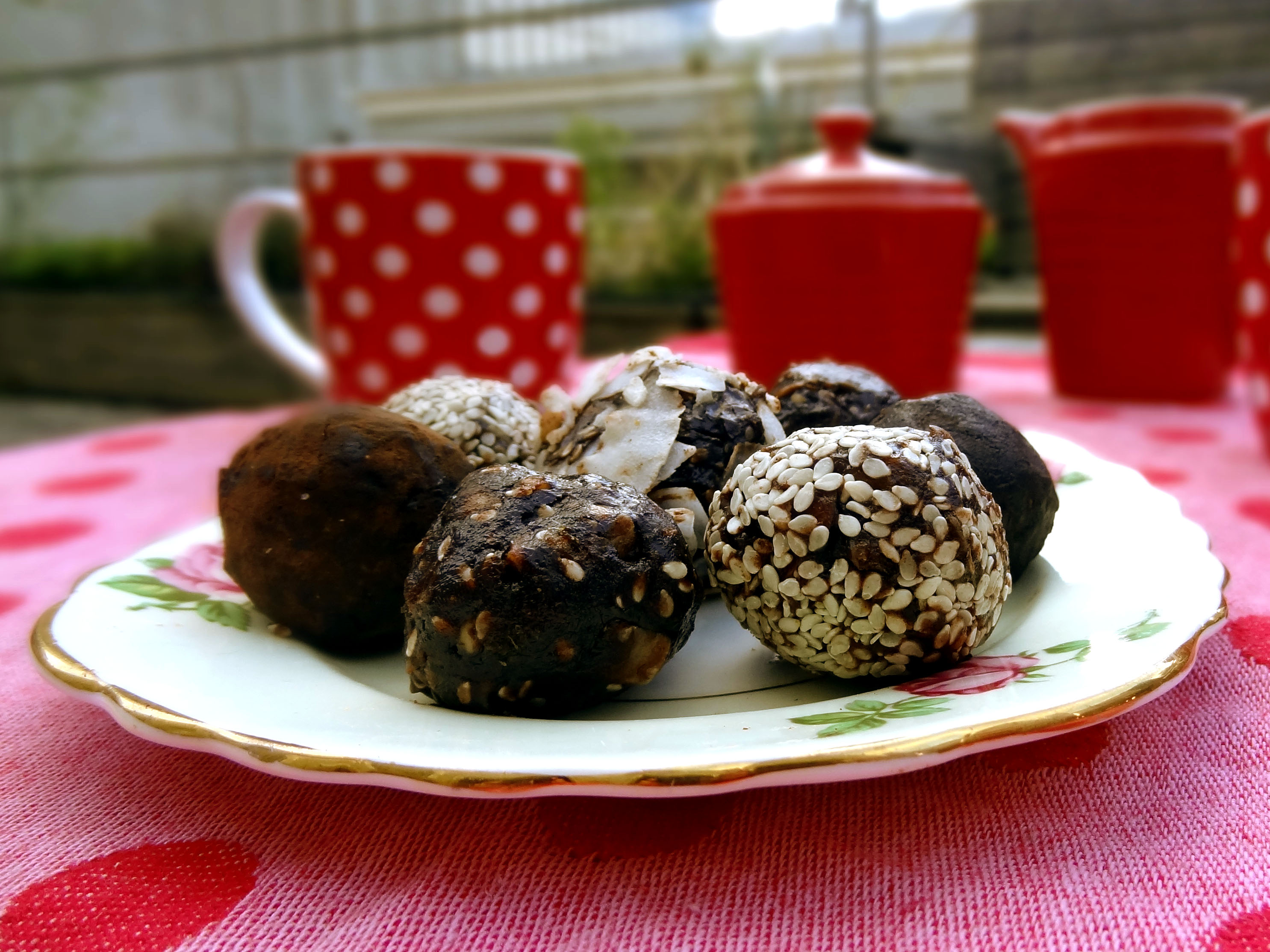
Bliss balls are convenient wee gems of chocolaty goodness, perfect for any time of the day (or night).  When I have them in the house, I may have one (or three) for breakfast with fruit, when I’m craving a sweetie treatie or needing some energy before I hit the gym.  They are super easy to make,  keep well and can be frozen and then eaten straight from the freezer.  I’ve adapted this recipe from a traditional bliss ball recipe I was given years ago to make them healthier and even yummier, with the addition of a dash of spice and the hint of orange.

These delightful chocolate spice bliss balls are vegan, gluten-free, sugar-free and jam packed full of energy.  They also have a high cocoa content – which means you get the chocolaty hit and numerous health benefits.  Cocoa is doing great things out there in the big, wide world – it has a large component of flavonoids , which are an effective antioxidant.  These flavonoids are known to  decrease blood pressure, improve blood vessel health and reduce cholesterol levels. Cocoa also has an uplifting effect on mood due to its content of phenylethylamine, which has a mood elevating effect somewhat akin to amphetamine-type substances. And my, doesn’t it feel good to be doing good.

Put the following dry ingredients in a bowl and set aside:

½ a cup of cocoa powder

1/2 a cup of sesame seeds

1/2 a cup of nuts of your choice (I used walnuts)

1 cup of  coconut, thread, chips or dessicated

In a saucepan, bring the wet ingredients to the boil, stirring constantly.  Continue to boil for a few minutes.

1 cup of chopped, pitted dates

1 cup of smooth or crunchy peanut butter

4 tablespoons of honey, agave or rice malt

1/4 of cup of  water

The zest of a whole orange

1 teaspoon of cinnamon

1/2 a teaspoon of mixed spice

1 teaspoon of vanilla extract or vanilla bean paste

Add the wet ingredients to the dry ingredients and mix well.  Form into balls as big or small as you like.  Roll in coconut, cocoa powder. sesame seeds or leave plain.

Put in the fridge on a baking paper-lined tray and allow to rest.  Enjoy any time  for a chocolaty energy hit, sans guilt and a sickly belly.

* Coconut Shimmy *

Image

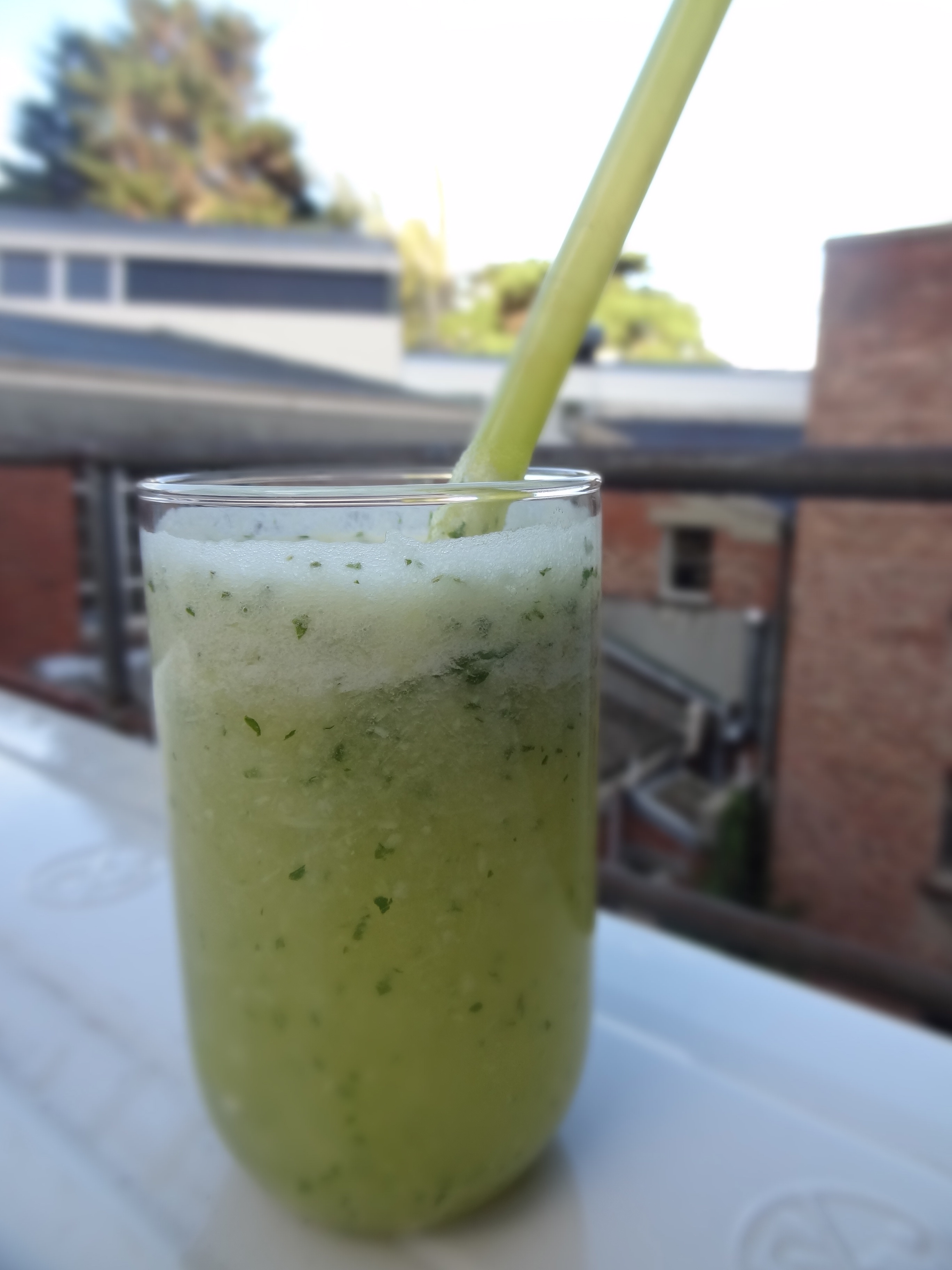
Yipee, the sun is back on!  It’s time to kick back on the patio with this tangy and über-hydrating Coconut Shimmy and make the most of these sunny afternoons.  It’s fruity, creamy and contains no sugar, soy or dairy – just pure super food goodness from the earth.  This Coconut Shimmy is especially good if you’ve just had a work out or a footloose and fancy free night on the town, as the main ingredient is coconut water and just in case you have not heard what amazing stuff this is, take note.  Coconut water is the clear liquid from young, green coconuts.  It is a natural, isotonic drink with the same level of electrolytic balance as we have in our blood, so it will replenish your body back to perfection.  Coconut water contains many essential vitamins and minerals, has a high potassium content and is oh so naturally sweet.  So, even as the nippier autumn kicks in, this dreamy refreshment will transport you back to that summer holiday by the sea, whilst giving you the bang to get outside and frolic in all of the pretty leaves.

300 mls of coconut water

1/2 a cup of fresh pineapple chunks

A few sprigs of fresh mint

A 1cm piece of ginger

A squeeze of lime or lemon juice

A few ice cubes if you need some cooling

Put all of the above ingredients in a blender and crank it on its highest setting.  Serve in the sun with your nearest and dearest.

* Beetroot, Feta and Mint Salad with Orange and Tahini Dressing *

Image

Beetroot, Feta and Mint Salad with Orange and Tahini Dressing

I feel so virtuous when I eat beetroot as it is surely one of the healthiest foods out in town.  These brightly coloured wee gems scream vitality and antioxidant goodness.  In fact, beetroot gets its brilliant brightness from Betacyanin, a pigment which doubles as an antioxidant.  Research has also shown that beetroot can help reduce blood pressure and associated risks such as heart attacks and strokes.  This is due to their high concentration of nitrates, which produce a gas called nitric oxide in the blood, in turn widening the blood vessels and lowering blood pressure – what a star!  Beetroot is also great if you’re making babies – it contains folic acid, which is essential for normal tissue growth and is crucial to the development of a baby’s spinal cord.  Eating beetroot during the first three months of pregnancy can help prevent spinal cord defects such as spina bifida. Beetroot also contains iron so is a winner for those suffering from fatigue during pregnancy.

This rustic salad tastes delicious, looks beautiful and is a textural sensation.  The sweetness of the beetroot contrasts brilliantly with the creaminess of the feta, and the tang of the orange and zing of the mint give the salad a delightful freshness.  Sometimes I mix it up and add walnuts to the salad for an interesting twist.  Recently I’ve also been using salt-reduced feta which has proven to be far superior to normal feta, which usually has a ridiculously high salt content in it  – and certainly not the pink Himalayan rock salt which I love so dearly.  Feel free to use any feta you please – (goat, sheep, cow) however, goat’s feta does work especially well with the beetroot.  This dish is super easy to prepare and is sure to release your Inner Domestic God(dess).

7 – 8 small beetroots (about 500 grams)

A sprinkle of Himalayan rock salt

A tablespoon of extra-virgin olive oil

100 grams of feta (preferably salt-reduced)

A handful of walnuts (optional)

A handful of mint, finely chopped plus a sprig for garnishing


Dressing

2 tablespoons of tahini

Finely grated zest and juice of an orange

1 clove of garlic, crushed

1/2 a teaspoon of Himalayan rock salt

1 teaspoon of extra-virgin olive oil


Heat oven to 190°C.  Scrub the beetroot until they are clean and shiny.  Trim off the ends and cut beetroot length ways into  segments, about 1 – 2cm thick.  Place in a roasting dish and toss with extra-virgin olive oil and Himalayan rock salt.  Roast for 40-50 minutes, turning beetroot a couple of times, until beetroot have softened and caramelised.  Allow to cool.

Place all of the ingredients for the dressing in a jar, pop on the lid and shake, shake, shake.

Finely slice or shave the feta length ways into pieces.

Toss the beetroot and chopped mint (plus walnuts if you fancy) with the dressing.  Arrange in a serving dish with the feta and garnish with mint.  Salute!


Rose-scented Oranges with Dates and Macadamias

Standard

Rose scented Oranges with Dates and Macadamias

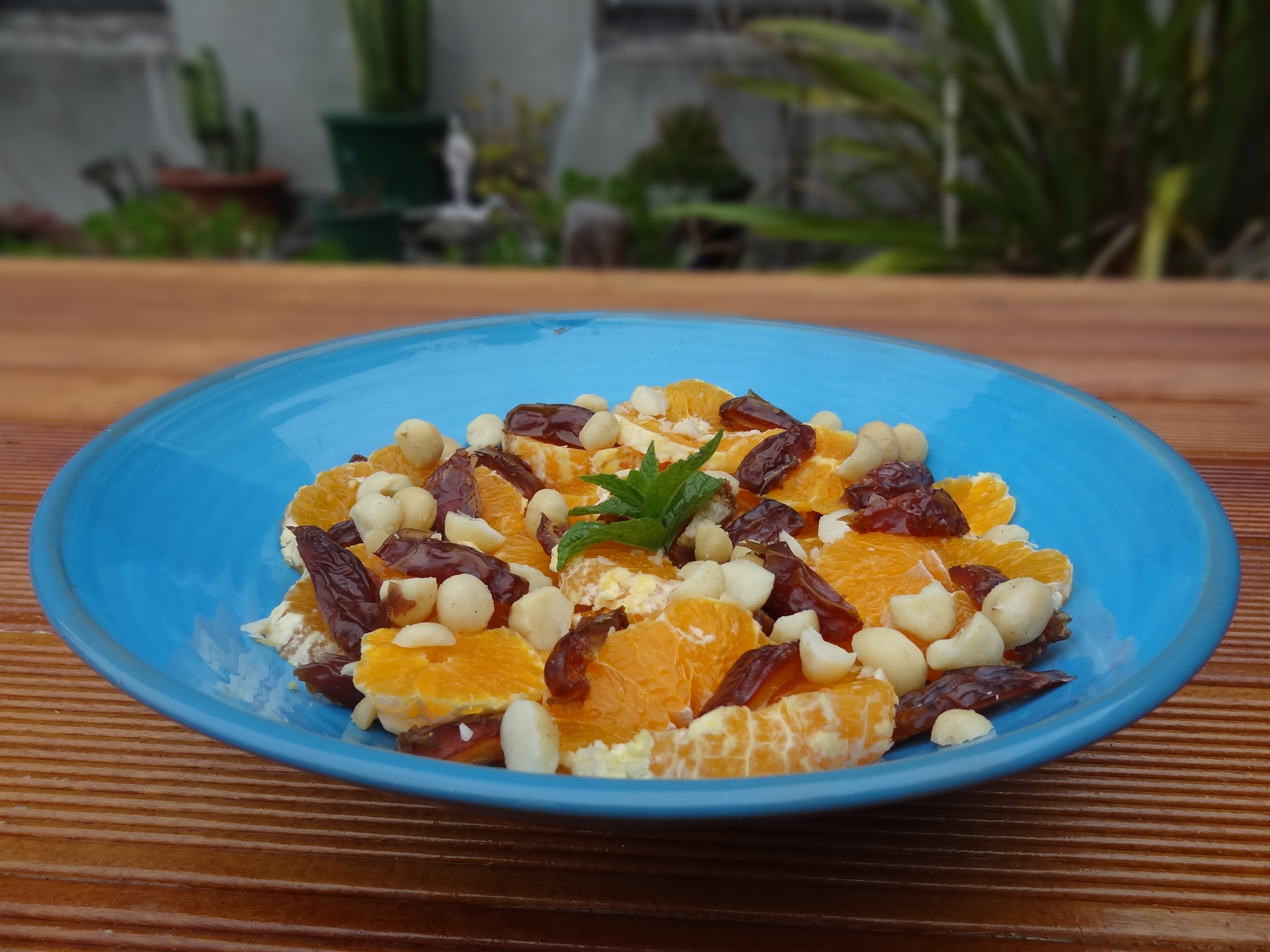
Much like the scent of a rose in bloom is one of life’s pleasures, devouring a rose-scented pudding  is also a delight for the senses.  This dish is Middle Eastern inspired, however instead of using the traditional pistachio nut common in Eastern sweets, I’ve added macadamias for a contrasting texture.   The ease of preparation is a bonus with this dish and it is perfect for entertaining, as it can be prepared a few minutes before the guests arrive and left to chill in the fridge.

This fragrant dessert is light, nutritious and the perfect way to end a meal,  as the oranges have a high concentration of vitamin C, which will boost the absorption of iron from the main course.  Macadamias are a good source of protein, potassium, calcium and dietary fibre and also provide a buttery richness which round this dish off perfectly.  Yummo.

Serves 4

4 large oranges

2 tablespoons of rosewater or Monin rose syrup

2 handfuls of macadamias

6 Medjool dates

A sprig of mint to garnish

Using your smallest and sharpest knife, slice around the orange to remove the pith and the flesh.

Slice the oranges into rounds, reserving the juice. Quarter the dates lengthways and remove the pip.

Arrange the orange rounds and dates in a serving bowl.

Mix the reserved juice with the rosewater or rose syrup and drizzle over the oranges and dates.

Cover and chill for 30 minutes.

Sprinkle over chopped macadamias just before serving.

Watch your guest’s eyes light up when they taste this delectable dessert and give yourself a pat on the back.

* Baba Ghannouj with Crudites *

Image

   Baba Ghannouj with Crudites

Baba Ghannouj, or “Poor Man’s Caviar” is quite possibly the most delicious food I’ve ever tasted.  I first started making this delectable Middle Eastern dip when I worked at Kimi Ora, the health resort in Kaiteriteri and it’s been a firm favourite ever since.  I believe the best cooking method is to crank up the barbecue and char the eggplants until they are wrinkled and blackened, which adds a smokey depth of flavour that permeates the dish.  Alternatively you can grill or roast the eggplants.

Not only delicious, Baba Ghannouj is also equally nutritious.  Eggplants are low in calories, rich in soluble fibre and are a good source of minerals such as iron, copper and potassium.  Tahini, which is a paste of finely ground sesame seeds, is also rich in vitamins and minerals, including methionine, an essential amino acid and lecithin, which reduces fat levels in the blood and protects against environmental toxins.  Tahini is 20 percent protein and is a rich form of calcium, which makes it a superfood star, especially for those partaking in a vegan or dairy-free diet.  Tahini also comes in two different guises – one made from unhulled sesame seeds which is darker, has a stronger flavour and is richer in nutrients.  The other is from hulled sesame seeds, which has a subtler flavour and is what I personally think works best in this dish.

2 small eggplants

2 – 4 cloves of garlic, depending on how garlicy you like it

3 tablespoons of freshly squeezed lemon juice

3 tablespoons of hulled tahini

1 teaspoon of himilayan rock salt

1/2 a teaspoon of cumin (optional)

1 tablespoon of olive oil

Small handful of parsley


Pierce skins of the eggplants in a few places with a fork.

EITHER:  Roast the eggplants in an oven heated to 19o*C for 30-40 minutes until soft inside;  OR

Fire up the barbie till it’s hot hot hot and grill those puppies until charred and blackened whilst turning them often; OR

Grill eggplants on a very hot, well-oiled pan, turning them often, until they are shriveled and soft.

When the eggplants are cool enough to handle, split them open and scoop out the flesh.

In a food processor, combine the garlic, lemon juice, tahini, rock salt and cumin (if desired).  Blend until smooth.  Add parsley and pulse a few times.

Drizzle  lightly with olive oil and garnish with chopped parsley.  Serve as a dip with crudites (raw vegies cut into bite-sized pieces) and wholegrain crackers.

* Quinoa Porridge with Flaxseed *

Image

Quinoa Porridge with Flax Seed

Quinoa is an ancient grain-like seed cultivated by the Incas over 5000 years ago.  It is a superfood, full of phyto-nutrients, antioxidants and can help balance your blood sugar.  Not only is quinoa extremely versatile to cook with, it is also easily digestible and packed with high quality protein and fibre.  Most importantly, it’s totally yummo.

I make this porridge all year round in many different variations, depending on mood and season.  I like to add a zesty orange-infused dried fruit mix from the bulk bins in the supermarket (thanks to our beloved Alison Holst) consisting of cherries, goji berries, golden sultanas and cranberries.  You can add whatever you feel like on the day to the porridge, like fresh, frozen or dried fruit and berries etc.    The dried fruit is added at the beginning of the cooking process and the fresh and frozen fruit slightly  later on.  There are different types of quinoa, including red, black and the standard cream colored variety.  The red variety is slightly crunchy, has a mildly bitter flavour and also needs to be cooked for a few minutes longer than the standard variety.

I usually make quinoa porridge at night whilst I’m preparing dinner and have the time to keep an eye on the pot, as it requires a stir every five or so minutes.  I simply reheat it in the morning and add a dash more milk if needed.  I generally use oat milk, but you can use any milk that takes your fancy.  This serves two people, but double, triple or even quadruple the recipe to your heart’s content.


1/2 a cup of quinoa, thoroughly washed

1 1/2 cups of milk of your choosing (diary, oat, soy, almond…)

1/2 a teaspoon of cinnamon

A pinch of Himalayan rock salt (optional)

A handful of dried, fresh or frozen fruit of your choosing

Yoghurt, ground flaxseed and raw nuts to serve

Rinse quinoa thoroughly in a fine-mesh strainer under cold running water.  Place in a small pot and cover with milk.  Add cinnamon, salt and dried fruit. You can add fresh or frozen fruit now or slightly later during the cooking process if you prefer.

Slowly bring to the boil and leave to simmer for 15 minutes, stirring every 5 minutes or so.  Take off the heat and put the lid on, allowing porridge to sit for a further 5 minutes.

Serve with yoghurt, ground flaxseed and raw nuts for a breakfast that packs serious punch.

Serves 2.

* Central Otago Fruit Salad with Manuka Honey Yoghurt *

Standard

Central Otago Fruit Salad with Manuka Honey Yoghurt

After spending New Years at Lake Hawea, Central Otago, we picked up some glorious fruit from a roadside stall in Roxburgh on our journey home.  Central Otago is famous for its luscious cherries and stone fruit and this fruit salad is a celebration of summer in Otago.  This fruit salad is bursting with potent antioxidants and the addition of Manuka honey will give your body the power to destroy destructive microorganisms, viruses and bacteria.   This dish is perfect as  a light breakfast or a healthy dessert.

Fruit Salad                                                         DSCF8244

4 peaches

4 nectarines

2 handfuls of raspberries

2 handfuls of cherries

Fresh mint to garnish.

Cut the nectarines and peaches in a rustic fashion and put in a bowl.

Place raspberries and cherries evenly over stone fruit.

Garnish with fresh mint from the garden.

Manuka Honey Yoghurt

2 cups of plain yoghurt

1 tablespoon of active Manuka honey

A few drops of vanilla extract or a smidgen of vanilla paste

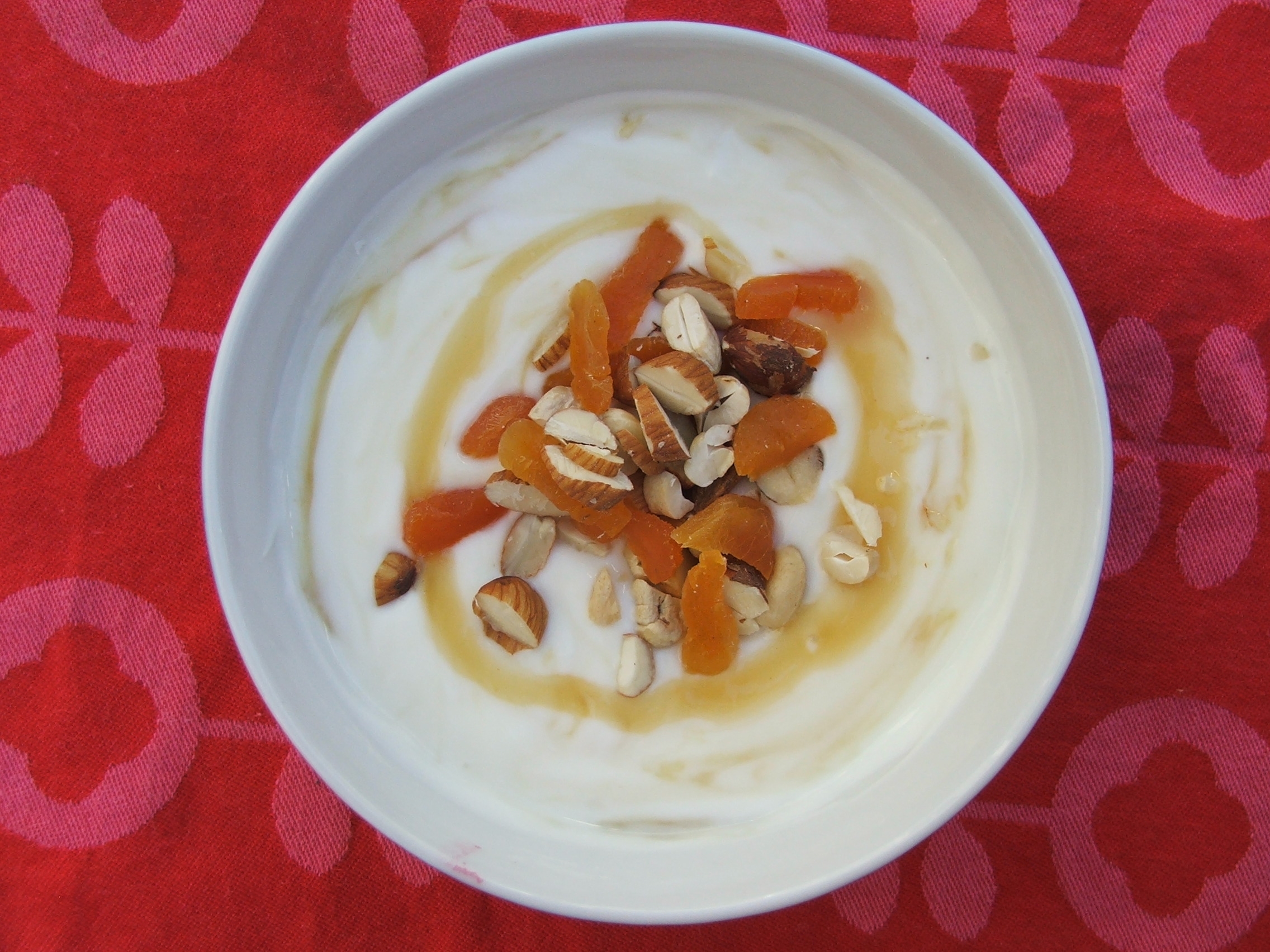
Chopped almonds and dried apricots

Heat up Manuka honey in the microwave for 20 seconds or until honey is a runny consistency.

Put yoghurt in a serving bowl and stir in vanilla paste/vanilla extract until well mixed.

Swirl Manuka honey into yoghurt by stirring in gently with a spoon.

Garnish with chopped almonds and dried apricots.

Lay fruit salad and Manuka honey yoghurt on the table and let everyone help themselves.  Serves 4.

* New Year’s Day Lemon Detox Water *

Standard

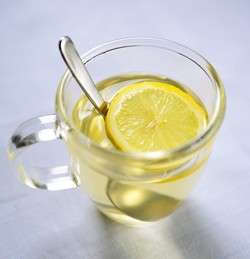
Lemon Detox Water

The day after the night before.  New Year’s Day is the day for new beginnings and fresh starts.  However,  for most of us it is also the day for dreaded hangovers from that banging party last night.  The best thing that you can do for your body is to kick start the day with the following simple trick, which will detox the liver and eliminate toxins lurking around the body from the night before.   By doing this today and incorporating it into your daily life, you will be feeling so fresh and so clean clean in a jiffy.

Ingredients

Juice of half a lemon

Half a cup of fresh, cold water

Half a cup of boiling water


Boil the kettle.

Fill glass to half way with fresh, cold water.

Top up with freshly boiled hot water.

Add the juice of half a lemon.

Sip this satisfying brew slowly whilst reflecting on last night’s antics.  Be sure to share the love with your crew from last night’s mammoth effort by making them some too.